
Mount Kerkeslin and the Athabasca River
Exhibition of a series of in-situ paintings by Rob Shields of Mount Kerkeslin seen from the Athabasca River in the Canadian Rockiesʻ at the Jasper Yellowhead Museum, 400 Bonhomme St. Jasper Alberta.
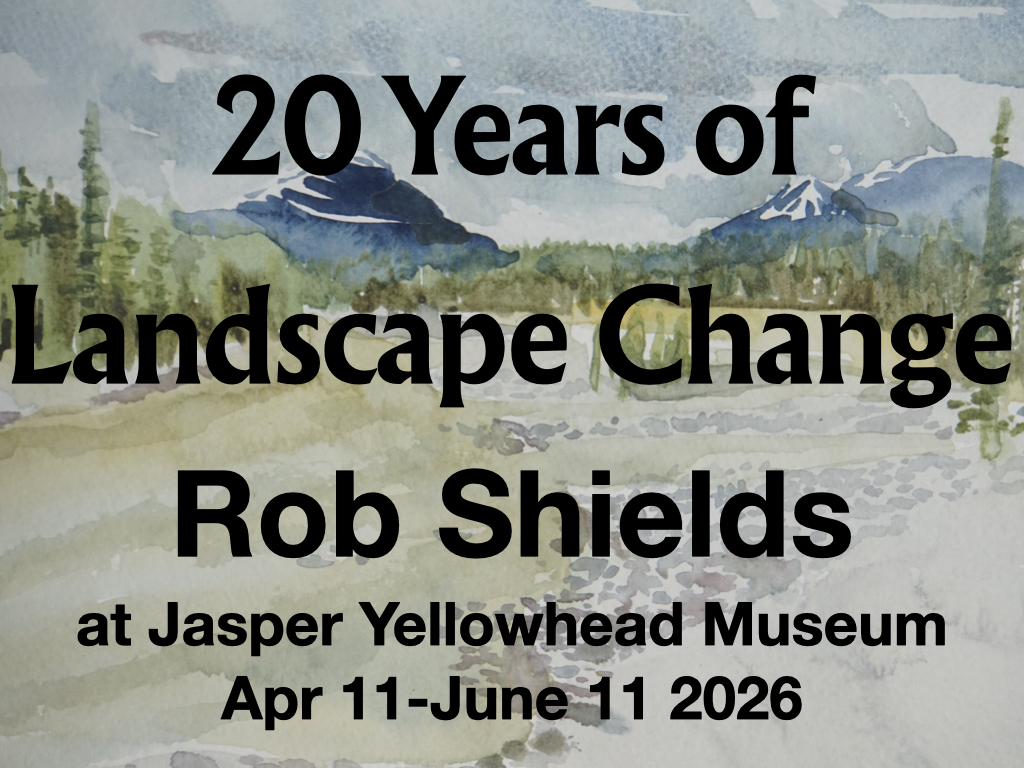
I returned to the same spot over twenty years, making sketches of Mount Kerkeslin in the Canadian Rockies just south of Jasper from a beach along the Athabasca River. These paintings continue a tradition of “plein aire” sketching in the mountains and in Canadian landscape art generally. The paintings unintentionally reflect what drew my attention that day. They show the light and colours, the limits and conditions on site when they are made, sometimes being altered or damaged by rain and snow.
Intended as personal sketches, over time the paintings record changes in the environment, including the impact of major events such as the Mountain Pine Beetle infestation from 2005-2021 and the 2024 Jasper Wildfire.
These paintings are presented as a tribute to the resilience of the mountain ecosystems and the community of Jasper. The first Paintings show how the view looked from 2005 to about 2012.
Rob Shields sketches and paints in watercolour. Although trained in architecture, he researches images of places and landscape and our sense of social and cultural space. He has taught in geography, social sciences and art at University of Alberta since 2004 where he holds the Henry Marshall Tory Research Chair, named after the University’s founder.
Mountain Pine Beetle 2014-20
The Mountain Pine Beetle affected Jasper National Park primarily from 2014 to 2020.
The beetles are indigenous to the west coast and lodgepole pines common in British Columbia. However, their population increased due to warm winters when they were able to overwinter just below the bark of trees. Blown over the Rockies by summer windstorms, the Mountain Pine Beetles expanded their diet to Jack Pines to infest more that 2.4 million hectares (5.93 million acres) of forest in Alberta by 2019, killing nearly all of the pine trees in affected areas including Jasper.
Paintings from the late twenty-‘teens illustrate the impact of the beetles. The colour of trees that were attacked changed to a lighter green, while the needles of those that were infested changed to a purplish-red, becoming grey over time as the forests died.
Jasper Wildfire 2024
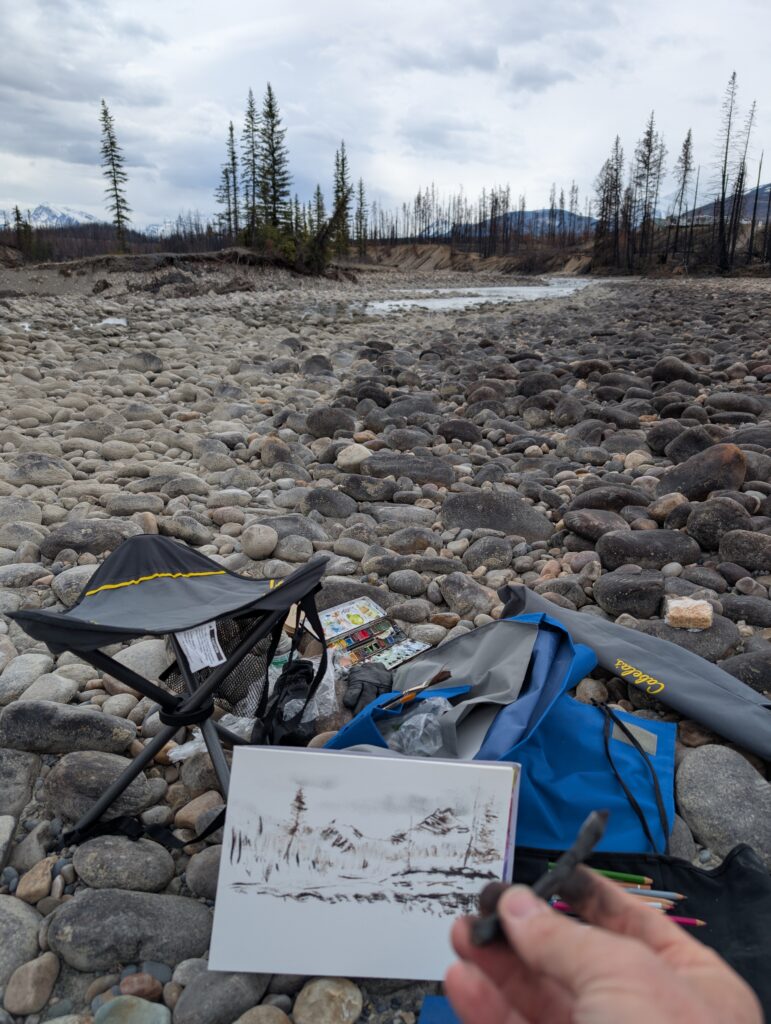
For millennia, forest fires were a recurrent feature of the mountain landscape. Historical photographs reflect this. They show the patchiness of tree cover in the mountain valleys. Warmer and dryer summers with high winds dried out the forests of the National Park. While there is debate about whether or not the dead pine trees worsened the fire risk, dried out forest floor vegetation, hot dry weather and wind spread the fire uncontrollably once started. The 2024 Wildfire arrived unexpectedly and spread rapidly in Jasper National Park.
The black and brown in recent paintings use the charcoal twigs of trees burnt on site in the 2024 Wildfire.
Three additional sketches after the 2024 fire show parts of the third of Jasper that was burnt, including the Anglican church, surrounded by omnipresent blue temporary fencing.

An artistʻs statement and brochure will be posted at the end of March 2026.